
Retrieving Calvin's Doctrine of the Christian Life
Calvin on the Christian Life, Part 1

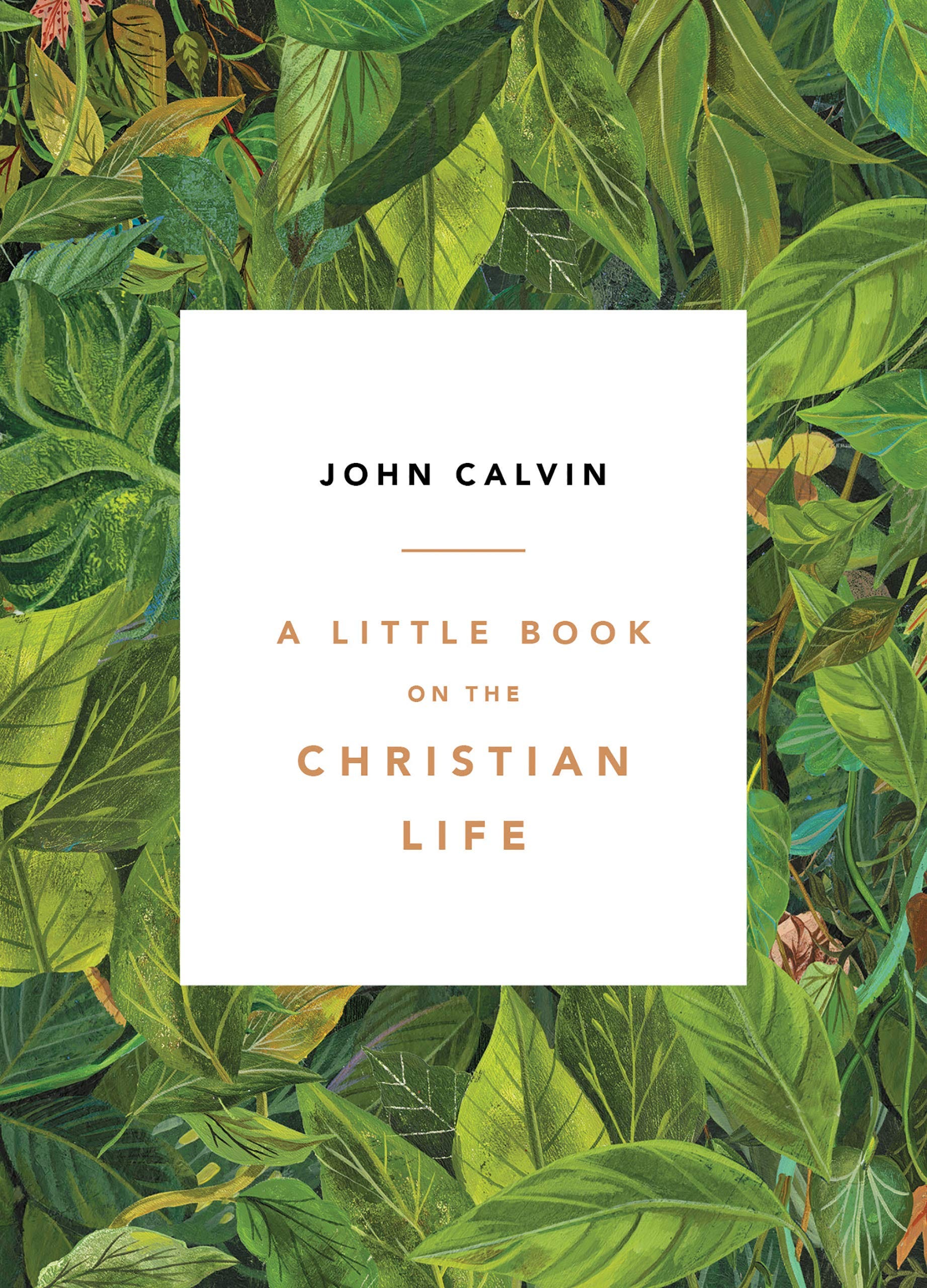
In the inaugural post of this newsletter, I mentioned that the name—A Little Newsletter on the Christian Life—is an intentional nod to John Calvin’s short work by a similar title. From the time I penned that initial post, I’ve been wanting to write something on Calvin’s view of the Christian life. Well, that time has finally arrived. As of now, my plan is to write five posts, each one roughly corresponding to successive chapters in the relevant section in the Institutes (Book 3, chapters 6-10). My aim is to unpack Calvin’s understanding of the Christian life and to consider how his vision might challenge (or reorient) some of our contemporary conceptions of the Christian life. Happy reading!
The ‘Christian Living’ genre is quite familiar to most (all?) of us who inhabit the evangelical subculture. Books, podcasts, and articles put forth practical advice on a slew of issues related to ordinary life. If you scan the “Religion” section at a local bookseller (or back when there were actual brick-and-mortar Lifeway stores you could browse), you typically find that Christian Living books predominate over other genres—say, theology or church history. Topics regularly addressed under this banner include: family and marriage, dating and relationships, personal growth, self-help, inspirational and devotional material, spiritual disciplines, stewardship and finances, suffering and grief, and the list could go on. A quick glance at the Amazon Best Sellers list under Christian Living reveals some expected titles—Gary Chapman’s The 5 Love Languages, Norman Vincent Peale’s The Power of Positive Thinking, books by Dave Ramsey and Louie Giglio, etc.—as well as some head-scratchers. (For example, who is Jonathan Cahn and what is this bizarre book called The Return of the Gods that’s number two in Christian Living?)
Perhaps you’ve already started bracing for my vicious take-down of the Christian Living genre. Sorry to disappoint, but I’m not actually interested in dunking on this category. For one thing, many of the books are honestly just too silly to merit serious criticism. Also, I’m sure that a lot of these titles are genuinely helpful to many people and offer concrete guidance on topics that are immensely relevant to readers. (Even if I might have my doubts about how biblical such guidance actually is.)
Instead, what I want to do in this post (and subsequent ones) is recover John Calvin’s rich vision of the Christian life. I’ll make passing reference here or there to contemporary notions about the Christian life, but these will mainly act as foils to Calvin’s view. In my judgment, Calvin can help us precisely because his approach to the Christian life is both robustly theological and closely tethered to Scripture. The impulse to search out guidance on everyday issues is an understandable—even good—desire, though it shouldn’t come at the cost of ignoring more central concerns and emphases of Scripture. When Christian teaching becomes assimilated into the genres of ‘self-help’ and the ‘motivational’ (a common occurrence with Christian Living books), the end product will often be a distorted version of the Christian life. Calvin, I think, can guard us against some of the worst excesses, providing us instead with a more compelling alternative.
Calvin’s exposition of the Christian life is instructive, first, because he situates his discussion within a larger doctrinal framework. Though Calvin’s Little Book on the Christian Life has often been printed as a stand-alone volume (and can be read with profit on its own), it is important to keep in mind that his treatment of the Christian life is, in reality, merely a few chapters within his much larger work, the Institutes of the Christian Religion. This means that what Calvin says briefly about the Christian life bears an organic relationship to his entire system of thought, including such topics as creation, the fall and original sin, the person and work of Jesus Christ, the church and the sacraments, and so on. Calvin was an incredibly comprehensive theologian, who seamlessly integrated various strands of biblical teaching.
My perennial frustration with Christian Living books is that they seem so myopic and disconnected from any larger vision of biblical truth. I find myself asking, “Why this topic? And why are these passages of Scripture being focused on to the neglect of others?” The prayer of Jabez from 1 Chronicles 4:9-10 is only the most egregious example of a common phenomenon. Perhaps you really will benefit from reading a book on how Psalm 23 provides a blueprint for setting your thoughts on the Lord, or how Daniel models Christian courage in the face of opposition. It’s often unclear, though, how these books fit into any larger understanding of Christian doctrine or the storyline of Scripture.
Of course, no book or article can say everything that might be said. There is wisdom in limiting one’s scope and focusing on a particular topic. But, even when tackling a specific aspect of daily life (whether anxiety or finances or whatever), there should still be an iceberg of theological reasoning that sits below the surface and that is informing all that’s being said. With Calvin, you don’t have to wonder about his overall theological vision, or if he even had one.
Second, a major strength of Calvin’s approach is that he makes crystal clear from where the power to live the Christian life ultimately comes: namely, the believer’s union with Christ. There is often ambiguity in Christian Living books about how certain behaviors or ways of thinking will be enacted in a person’s life. What, we might ask, is the source that’s empowering this vision of life? What is the fountain from which everything else flows? This ambiguity is especially apparent in “self-help” Christian Living books, a category that I’m quite sure would have puzzled Calvin (to put it mildly).
Book Three of the Institutes, in which Calvin’s treatment of the Christian life is nestled, is concerned with how God’s grace actually comes to us in Christ, and how that grace is appropriated and made effectual in our lives. (Book Three is aptly titled, “The Way in Which We Receive the Grace of Christ: What Benefits Come to Us From It, and What Effects Follow.”) Calvin opens Book Three with a justly famous passage that reveals how important he viewed union with Christ,
First, we must understand that as long as Christ remains outside of us, and we are separated from him, all that he has suffered and done for the salvation of the human race remains useless and of no value for us. Therefore, to share with us what he has received from the Father, he had to become ours and to dwell within us. For this reason, he is called “our Head” [Eph. 4:15], and “the first-born among many brethren” [Rom. 8:29]. We also, in turn, are said to be “engrafted into him” [Rom. 11:17], and to “put on Christ” [Gal. 3:27]; for…all that he possesses is nothing to us until we grow into one body with him.1
For Calvin, union with Christ is the foundation of both our justification and our sanctification. We receive the “double grace” (duplex gratia) of justification and sanctification through our union with Christ. Though we can, and must, distinguish between justification and sanctification for various purposes, we ought never separate them. They are inseparable graces that come to us through the one, undivided Christ. Moreover, the Holy Spirit is the one who joins us to Christ, and faith is the instrument by which we become partakes of the blessings of Christ. Union with Christ, in one person's words, “lies at the heart of Calvin’s teaching on salvation and the Christian life.”2
Many Christian Living books—how shall we say this?—fail to make the connection explicit enough between the behaviors or attitudes being commended and the believer’s union with the ascended Christ as the ground of one’s obedience. Apart from this foundation of our being united and made one with Christ, how can we meaningfully speak of Christian living (cf. Gal 2:20)? Whether the driving engine is positive thinking or self-acceptance or just plain ol’ self-willed religion, the result is something less than the biblical notion of sanctification.
A third lesson to learn from Calvin’s approach: He made sure that the goal—the telos—of the Christian life was woven into his entire discussion. This, I think, has significant biblical warrant (cf. Rom 8:29). For Calvin, the goal of the Christian life is nothing other than the restoration of the image of God in man, which was corrupted and effaced in Adam, but has now been beautifully shown forth in Christ, the true and living image of God. Moreover, our being restored to the image of God is so that our original destiny as God’s creatures might be realized: namely, eternal union and fellowship with God.
In fact, his section on the Christian life opens with this concern squarely in view: “The goal of God’s work in us is to bring our lives into harmony and agreement with His own righteousness, and so to manifest to ourselves and to others our identity as His adopted children.”3 Or, as he puts it more plainly a little later, "Holiness is the goal of our calling."4 God's desire for our Christian lives is that we would be sanctified so as to progressively reflect his righteous character. The goal is not, ultimately, a sense of inner peace or more control over one's schedule, as useful as those things may be. Our felt wants or desires can't be the primary lens through which we view the Christian life. Such concerns, however legitimate, must be subordinated to this overarching purpose that Scripture gives.
Fourth, Calvin emphasized that the Christian life necessarily marries together head and heart—doctrine and life—or else its hypocrisy. This point might surprise those who've encountered Calvin only through the caricatures of others. The French reformer was much more human and relatable than many of his critics would lead you to believe. He begins a key section on the Christian life by rebuking those “who want to be called Christians but possess nothing of Christ except the title and appearance.”5 Such nominal Christians demonstrate by their lives that they have no share in Christ, "no matter how eloquently and loudly they talk about the gospel."6 But, as he goes on to explain,
True doctrine is not a matter of the tongue, but of life; neither is Christian doctrine grasped only by the intellect and memory, as truth is grasped in other fields of study. Rather, doctrine is rightly received when it takes possession of the entire soul and finds a dwelling place and shelter in the most intimate affections of the heart.7
While Calvin recognized the priority of doctrine (since gospel teaching is the source of godly affections and the transformation of life), he also underscored doctrine’s inadequacy on its own. As he says, “In order for doctrine to be fruitful to us, it must overflow into our hearts, spread into our daily routines, and truly transform us within.”8 The Christian life must have an integrity, an inner consistency between the faith that one espouses and the life that one lives.
Finally, Calvin’s vision of the Christian life is worth recovering because of his realistic incrementalism. By “incrementalism,” I mean that Calvin urged slow and steady (i.e., incremental) growth in the Christian life, not overnight transformation. As he put it, “I’m not...talking about gospel perfection... If that were the case, everyone would be excluded from the church, since we do not find any in it who are close to being perfect.”9 He was acutely aware that Christians—even as God sanctifies them and produces in them integrity and a heart-felt desire for him—still sin and are weighed down by all manner of weakness. This, we note in passing, sounds vastly different than many contemporary books that promise transformation or change in seven easy steps.
At the same time, Calvin's incrementalism ought never to lead to laziness or a slackening of God’s standards. Calvin, once more, says, “Let us fix our eyes on the goal and sole object of our pursuit. Let that goal, toward which we must strive and contend, be established from the beginning.”10 Though we will never attain perfection in this life, we must not lower our gaze from God's call to holiness. He continues, "After all, it's not right to barter with God regarding what we will and won't undertake from those things He has prescribed for us in His Word."11 Calvin is able to hold in tension the lofty ideal of holiness with a sober-minded realism about our remaining sin. Instead of trying to resolve this tension, we do better to continually keep both before our minds. He concludes this section with these hopeful words,
Let us move forward according to the measure of our resources and pursue the path we have begun to walk. None of us will move forward with so little success that we will not make some daily progress in the way. Therefore, let us keep trying so that we might continually make some gains in the way of the Lord, and neither let us despair over how small our successes are. For however much our successes fall short of our desire, our efforts aren’t in vain when we are farther along today than yesterday. So let us fix our eyes on the goal with sincerity and simplicity, aspiring to that end—neither foolishly congratulating ourselves, nor excusing our evil deeds. Let us press on with continual striving toward that goal so that we might surpass ourselves—until we have finally arrived at perfection itself. This, indeed, is what we follow after and pursue all our lives, but we will only possess it when we have escaped the weakness of the flesh and have been received into His perfect fellowship.12
That, I submit, captures the biblical tension quite well: gritty realism about our indwelling sin mingled with gospel hope regarding our progress in the faith. We would do well to make such a posture our own.
My aim in this post has been modest. I’ve tried to show how Calvin’s approach to the Christian life offers us something that much contemporary teaching on the Christian life lacks. In future installments, I plan to delve into various aspects of Calvin’s understanding of the Christian life, such as self-denial, meditation on heaven, and the use and enjoyment of the things of this world. I hope you’ll join me on the journey.
John Calvin, Institutes of the Christian Religion (2 vols; ed. John T. McNeill; trans. Ford Lewis Battles; Louisville: Westminster John Knox Press, 1960), 1:537.
Guenther H. Haas, “Calvin’s ethics,” in Donald McKim (ed.), The Cambridge Companion to John Calvin (New York: Cambridge University Press, 2004), 94.
John Calvin, A Little Book on the Christian Life (ed. and trans. Burk Parsons and Aaron Denlinger; Sanford, FL: Ligonier Ministries, 2017), 3.
Calvin, A Little Book on the Christian Life, 7.
Calvin, A Little Book on the Christian Life, 11.
Calvin, A Little Book on the Christian Life, 12.
Calvin, A Little Book on the Christian Life, 12-13.
Calvin, A Little Book on the Christian Life, 13.
Calvin, A Little Book on the Christian Life, 14.
Calvin, A Little Book on the Christian Life, 14.
Calvin, A Little Book on the Christian Life, 14-15.
Calvin, A Little Book on the Christian Life, 16-17.